
Introduction
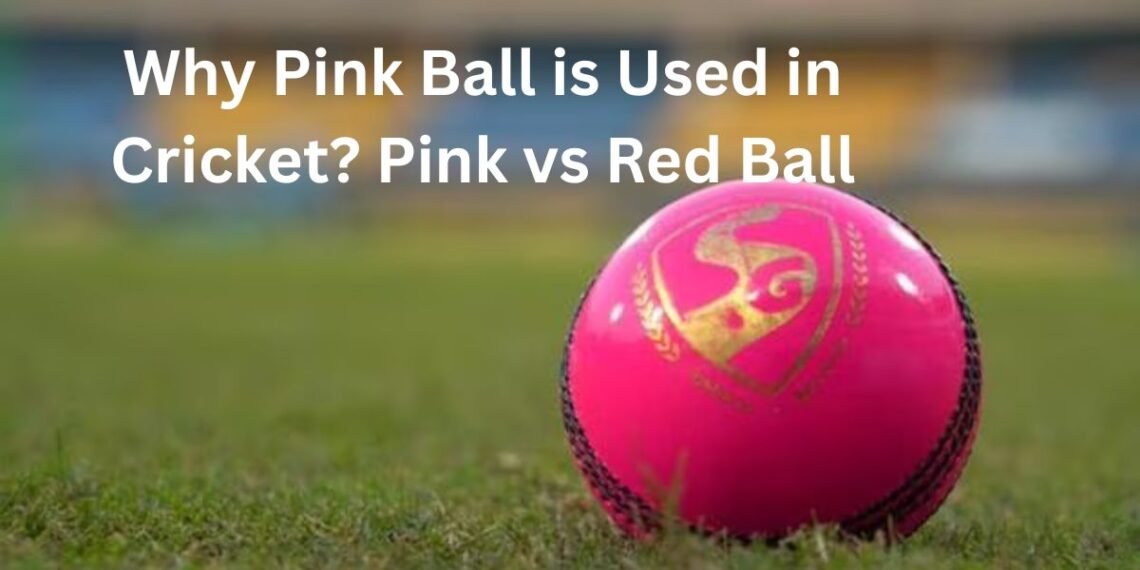
The game of cricket has seen its fair share of developments throughout the years, and one of the more drastic changes in recent times must be attributed to the development and use of pink coloured cricket ball. Historically red balls were used in Test matches played during the day, and white balls are used in one-day cricket. But the advent of day-night Test cricket brought a new problem, it’s near impossible for players and spectators to see the red ball under bright stadium lights. The pink ball was an answer to this, adding a new layer in the Test cricket series. Its enhanced visibility and durability means it can be used for the evening sessions of modern day Test matches.
The Origin of The Pink and Why Pink Ball is Used in Cricket
For many years, Test cricket was contested only during the day and so visibility had never been a problem. But, cricket boards had other reasons for seeking to popularize Test matches by holding them at times when more people could watch them, particularly post work. Day-night Tests were considered, but the red ball that was typically used did not show up well under floodlights. For the same reason, a white ball wouldn’t work either because Test players wear white, and the ball would be difficult to see. The pink cricket ball was developed after many trials and errors, it debuted officially in the first ever day-night Test match that took place in 2015.
Why Pink Ball is Used in Test Cicket?
The pink ball is designed to be more visible against the dark evening skies. The red ball is harder to see on a black background so the strong floodlights make it difficult to follow at times. The pink is more vivid and radiant, allowing for better follow through the ball by players, umpires, broadcasters and fans in the stands and at home. The longer-lasting color of a soft, pink ball in contrast to white balls that quickly cloud and dull. This means the pink ball is able to withstand the long spells of play that Test cricket demands. The pink ball contributes to this competitive equality by providing better visibility and match performance in day-night Test matches.
Pink Ball vs Red Ball
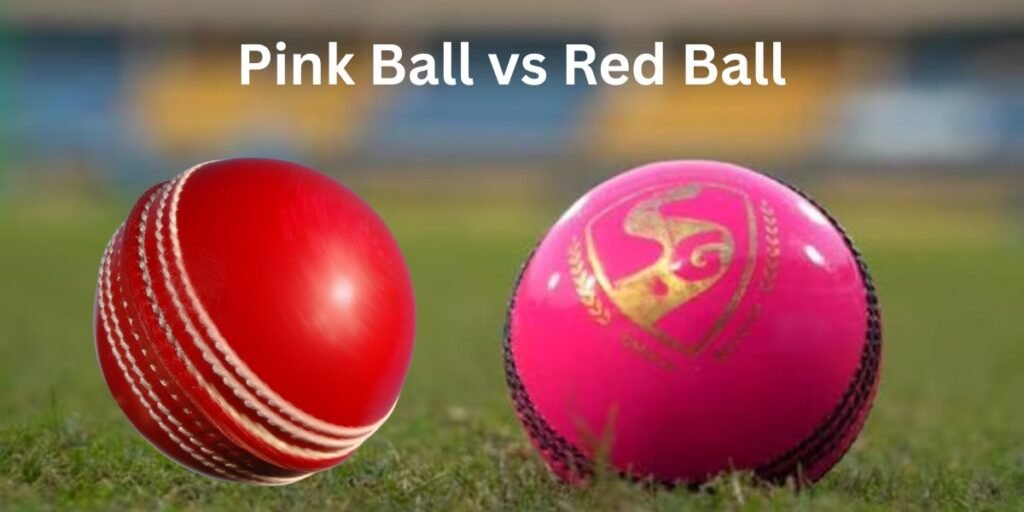
The traditional red ball has been customary in Test cricket for as long as it was invented because it is visible enough to play in daylight and hardly deviates from its normal features that bowlers depend on — swing and seam. However, with the rise of Day-Night cricket, the pink ball vs red ball debate began, as the pink ball was introduced to overcome visibility problems in artificial light. It has a thicker, more resilient surface and remains easier to spot under floodlights. The lacquered coating makes it move around more in the initial overs, and unlike the red ball, it retains its hardness for longer spells. This difference in behavior is what makes the pink ball unique and challenging for both batters and bowlers.
How the Pink Ball Performs Under Lights
The pink ball’s most controversial feature is the vastly different way it behaves under artificial light. With the lacquered surface remaining harder for a longer time, the ball tends to swing more in the air which gives fast bowlers an edge in conditions after sunset. The seam is still pronounced, which helps the bowler move it off the pitch too. But batsmen can also find it hard to read the ball, particularly against express pace. Fielders also find it difficult in the deep because of the ball’s glare and shine.” Most importantly the pink ball adds a new tactical dimension to Test cricket, with night sessions becoming the most exciting and unpredictable.
Read Also: Fastest Bowler in the World
Suitable for Television and Spectators
Day-night Tests has also created an interest among the TV viewers and stadium audience. For evening matches, more fans can watch them live after work and school, so that helps engagement. The pink ball is also more visible to television cameras, giving viewers a crisper picture. It’s a win-win for broadcasters who get better match visuals as well and cricket boards, who can now schedule matches at times when more people watch. This has helped Test cricket to appeal more to the younger free-time audience which might not always be available for daytime play.
Durability and Performance
One of the reasons to pick a pink one for Test cricket is also its reduced wear and tear compared to white balls. Such a cricket ball is white and during an extended match the ball loses its white color, resulting in it becoming unsuitable for long-format games. The pink ball is made with a thicker color coating application and is finished with a durable finishing layer that already improved the longevity of keeping its shine for more overs. This longevity will help the ball retain it’s characteristics for longer periods of play, which means batters and bowlers can be competitive with one another. The pink ball also swings particularly under evening conditions, when it’s cooler which adds another element that plays into the hands of fast bowlers.
How the Pink Ball is Made
Though the pink cricket ball is almost identical to a standard red ball, it goes through a slightly different production process. Stronger and more visible pink pigment is used for the sprayed leather to counteract the loss of brightness under floodlights. To improve the visibility of the ball a glossy coat has been added for better light reflection while maintaining a high shine better and more durable. With the pink ball, ‘the seam is darker’ so that it becomes easier for players as well as spectators to pick up revolutions of the ball from hands. Some manufacturers put additional layers of lacquer on the ball to protect its visibility and performance during matches.
Behavior of the Pink Ball During Play
The pink ball does a lot different than the red one. In the evenings, which in twilight are very ideal for swing, the ball lashes out due to cooler air and shinning light. So often at that time it becomes a struggle for the batters, because you are actually getting more swing and Bowlers get something out of it. The ball can also feel a touch harder than the red one, which when new can generate more pace and bounce, particularly on lively pitches. A lot of the headline-big performances in day-night Test cricket have been recorded in this evening session indicating how the conditions affect the ball game.
Challenges with the Pink Ball
But the pink ball has a few drawbacks, despite all its plusses. The excessive additional lacquer can also make it difficult for a spin bowler to grip the ball, especially on moist or damp pitches. As the varnish wears off in some stadiums, the ball can lose visibility, though manufacturers continue to advance its design. The ball can also move and play a bit during night sessions due to the presence of dew. Despite those challenges, cricket boards and manufacturers are always tinkering to try out improvements that might make the ball better suited to different conditions worldwide.
Read Also: 18 Jersey Number in Cricket | Kolkata Fatafat arcarrierpoint.net |
Impact on Modern Cricket
The pink ball has been a major contributor in Test cricket gaining traction. It has lifted the format. allowing matches during prime-time viewing hours, and made it available to contemporary audiences. Stadium attendance has been better for many day-night Tests, and television viewership has also reaped benefits. The introduction of the pink ball has brought another layer to tactics for teams, with captains and bowlers setting up differently for periods of play under lights. This revolution has brought an air of novelty and a new layer of tactics to the longest format.
Conclusion
The pink ball has become a significant chapter of contemporary Test cricket, notably in day-night matches. It eliminates the visibility issues up against floodlights, it offers improved durability compared to regular white balls, and the balance on the playing field remains the same. It might behave differently from a red ball and pose fresh challenges to the players, but it has eventually helped Test cricket remain pertinent in an ever-evolving cricketing world. As, the pink ball will probably be a more polished and vital ingredient of cricket’s future.
Read Also: Mytecharm com | Which IPL Team Has the Highest Brand Value in 2025